Allergies are one of the most widespread health conditions worldwide, affecting millions of people every year. While many allergies are mild, some can cause severe reactions that require immediate medical attention. Understanding what triggers allergies, how symptoms appear, and the best ways to manage them can help you stay safe and improve your quality of life.
What Are Allergies?
An allergy occurs when the immune system reacts to a harmless substance — such as pollen, dust, or certain foods — as if it were dangerous. These substances are called allergens. When the body comes in contact with an allergen, the immune system releases chemicals like histamine, leading to allergic symptoms.
Allergies can affect anyone, from children to adults, and may develop suddenly even if you previously had no reactions.
Common Allergy Triggers
Allergens can come from your environment, food, or even medications. The most common triggers include:
Pollen
- Comes from trees, grasses, and weeds
- Common cause of seasonal allergies or “hay fever”
Dust mites
- Microscopic organisms that live in bedding, carpets, and upholstery
- Trigger symptoms year-round
Pet dander
- Skin flakes, saliva, and hair from cats, dogs, or other animals
- A major allergen for sensitive individuals
Mold
- Grows in damp places like bathrooms, basements, and kitchens
- Spores released into the air can cause allergic reactions
Food allergens
Common foods that cause allergies include:
- Peanuts
- Tree nuts
- Milk
- Eggs
- Wheat
- Soy
- Fish and shellfish
Food allergies can be mild to life-threatening.
Insect stings
Bee, wasp, or ant stings can trigger severe reactions in some people.
Medications
Certain drugs, such as penicillin and other antibiotics, can cause allergic responses.
Chemical irritants
Perfumes, cleaning products, smoke, and air pollutants can trigger allergic symptoms, especially in people with asthma.
Common Symptoms of Allergies
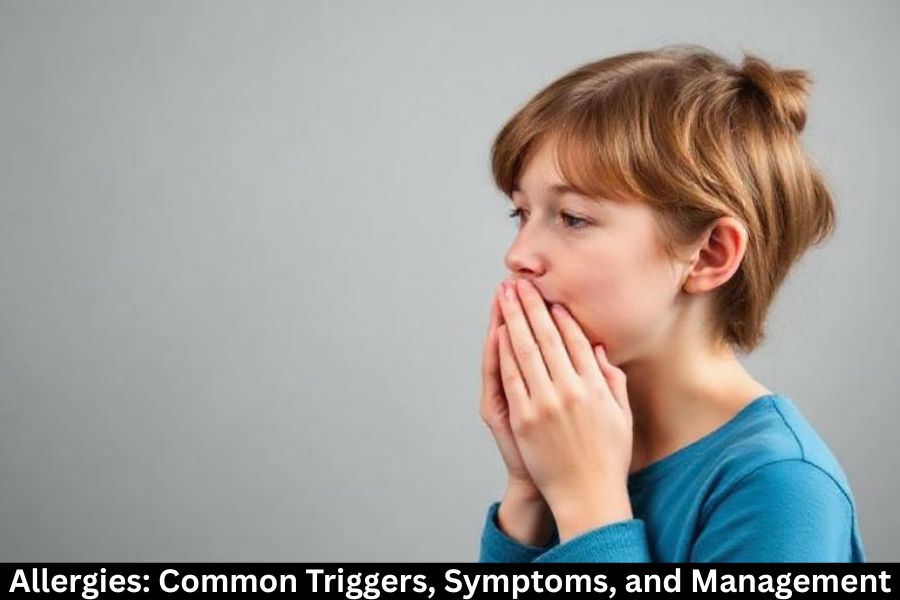
Allergy symptoms vary depending on the trigger and severity. They can affect the skin, respiratory system, digestive system, or the entire body.
Respiratory symptoms
- Sneezing
- Runny or stuffy nose
- Itchy or watery eyes
- Coughing
- Wheezing or shortness of breath
Skin symptoms
- Redness
- Itchy rashes
- Eczema flare-ups
- Hives (raised, itchy welts)
Digestive symptoms (food allergies)
- Stomach pain
- Nausea or vomiting
- Diarrhea
Severe allergic reactions (Anaphylaxis)
Anaphylaxis is a life-threatening reaction that requires emergency treatment. Symptoms include:
- Difficulty breathing
- Swelling of the face, lips, or throat
- Rapid heartbeat
- Dizziness or fainting
Immediate medical attention is crucial in such cases.
How Allergies Are Diagnosed
Doctors may use one or more of the following tests:
1. Skin prick test
Small amounts of allergens are applied to the skin to check for reactions.
2. Blood tests
Measure the level of IgE antibodies, which indicate an allergic response.
3. Elimination diets
Used for food allergies by removing and reintroducing specific foods under medical guidance.
A proper diagnosis helps you understand your triggers and manage symptoms more effectively.
Effective Allergy Management Tips
While allergies cannot always be cured, they can be controlled with the right steps.
1. Avoid triggers
Identify what causes your allergies and limit exposure as much as possible.
2. Use prescribed medications
Common treatments include:
- Antihistamines
- Nasal sprays
- Decongestants
- Eye drops
- Inhalers for asthma-related allergies
3. Immunotherapy (Allergy shots or tablets)
These treatments gradually expose your immune system to allergens, reducing long-term sensitivity.
4. Keep your environment clean
- Use air purifiers
- Wash bedding regularly
- Keep humidity low to prevent mold
- Vacuum using HEPA filters
5. Practice good skin care
For eczema or skin allergies, moisturize daily and avoid harsh soaps.
6. Carry emergency medication
People with severe allergies should carry an epinephrine auto-injector (EpiPen) at all times.
7. Monitor seasonal changes
Pollen levels vary with the weather — staying informed can help you plan outdoor activities.
Prevention Tips for Allergy Sufferers
- Keep windows closed during high-pollen days
- Shower after being outdoors
- Avoid strong fragrances
- Wear masks when cleaning dusty spaces
- Read food labels carefully if you have food allergies
Conclusion
Allergies can be disruptive, but with awareness and proper management, they can be controlled effectively. By understanding your triggers, recognizing symptoms early, and following preventive steps, you can reduce allergic reactions and improve your overall well-being.